
01→
Serial production
Standard catalogue series models. Lowest price per kilowatt, shortest delivery times.
60–90 days
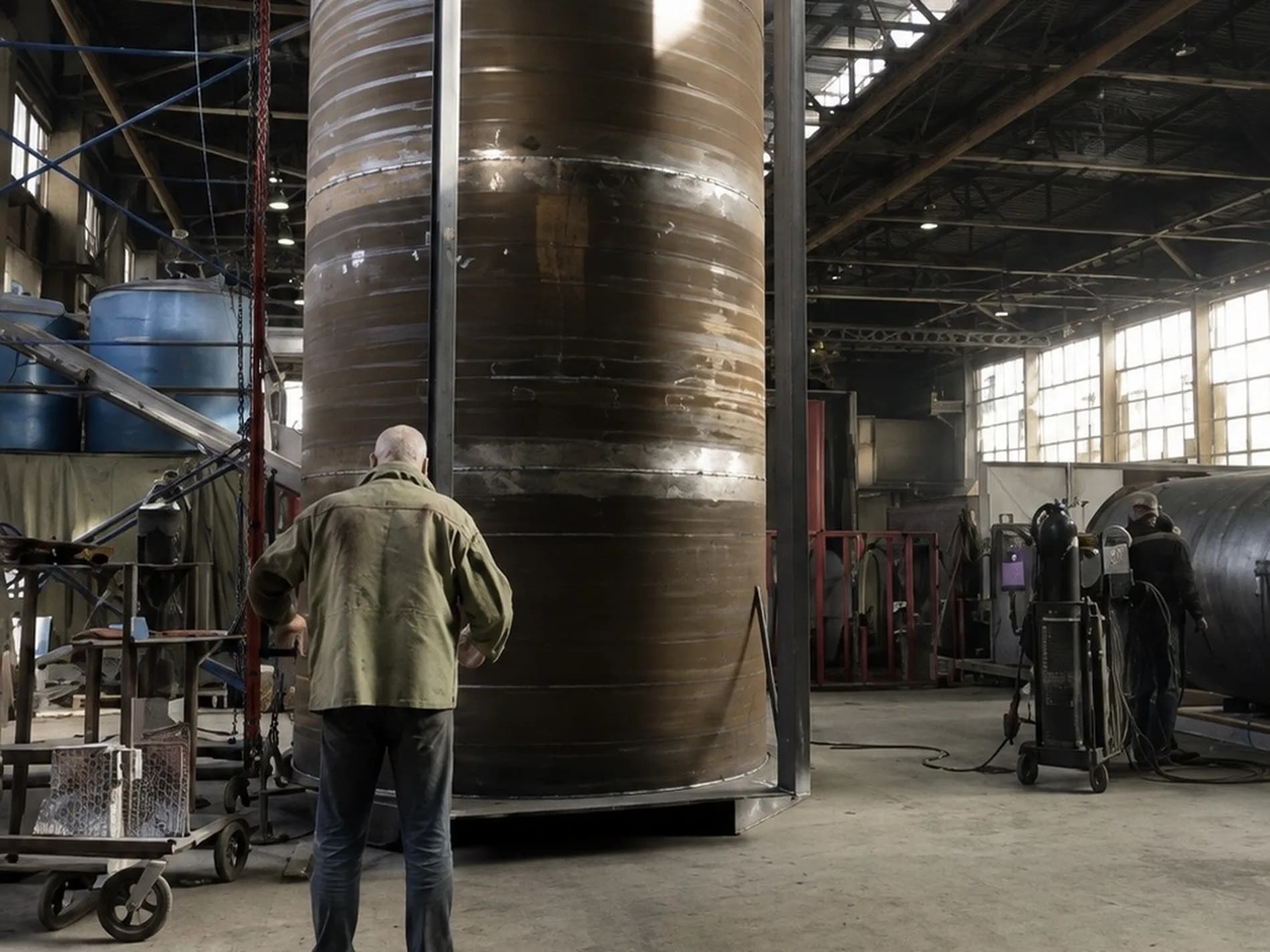
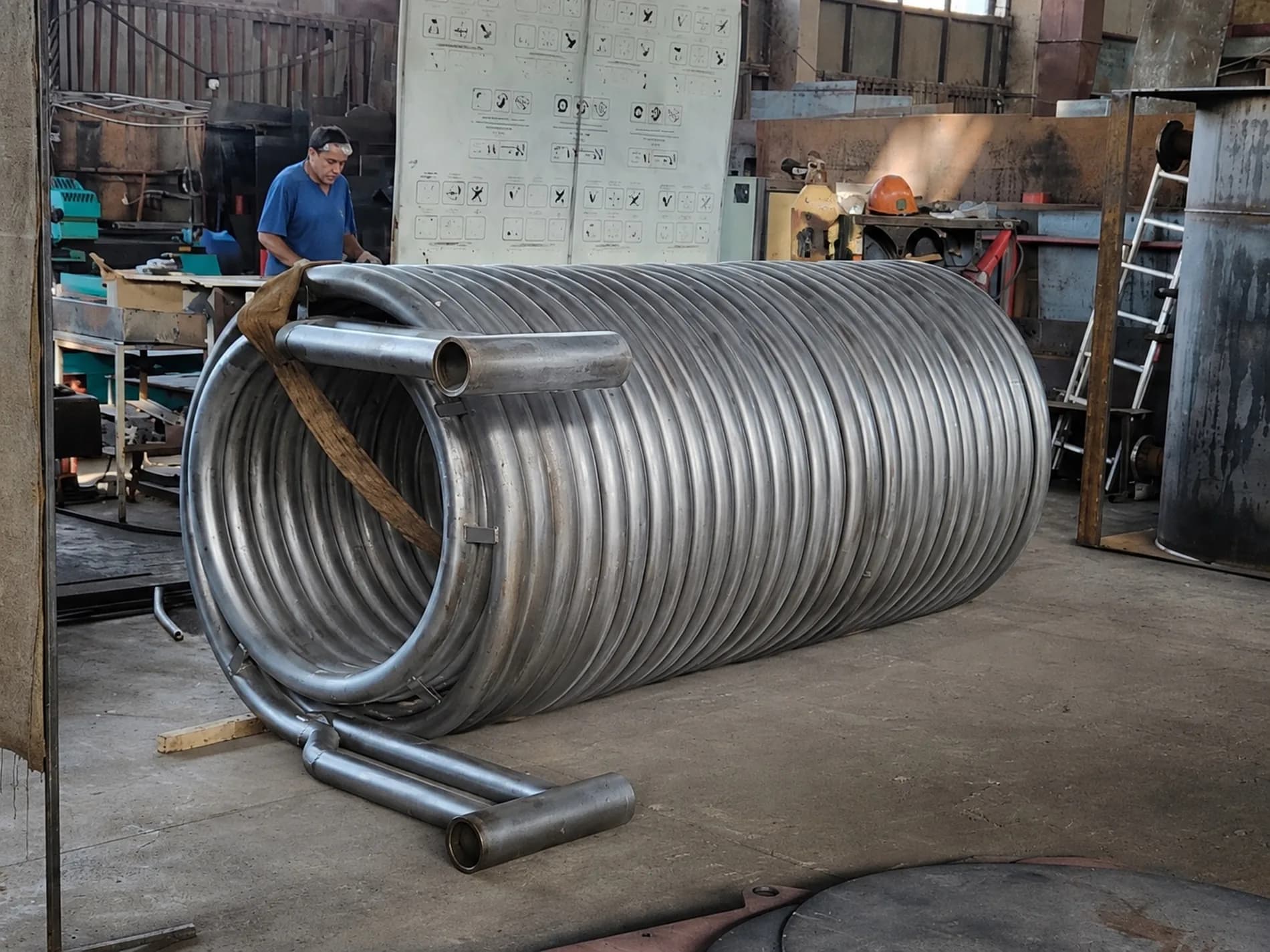
Standard catalogue series models. Lowest price per kilowatt, shortest delivery times.
Reworking a standard model for dimensions, non-standard fuel or climatic design.
A boiler for unique requirements: process, non-standard coolant parameters, special steel.
Manufacturing a boiler to the client's design documentation. Design supervision included.
Overhaul and modernization of existing boilers from any manufacturer. Heat exchanger and shell replacement.
Manufacturing spare parts for Boilte and other manufacturers' boilers to drawings.
Boilte Manufacturing is an industrial boiler works with 22,000 m² of production space, 180 machine tools, 420 people and an output of up to 1,000 boilers a year. Scale of that kind lets us run two modes of work at once that are normally split between different companies: a flow of catalogue models and one-off units of up to 60 MW. Below we go through the six models of working with an order and show how to choose the right one for your task before design work even begins.
Series work and one-off work only conflict where a factory has been built around a single type of work. If all the tooling is set up for one particular size, any departure from it breaks the schedule. If a company lives from project to project, it never accumulates a technological base, and every routine supply costs more than it should.
We separate these modes by manufacturing route rather than by shop. Incoming inspection of steel, the welding stations, weld inspection, assembly and the test rigs are shared by every product: a catalogue boiler and a heat-recovery boiler built to customer drawings go through exactly the same checks. What differs is the volume of design work before metal is cut and the number of approvals on your side, and that is what sets the lead time and the price.
Choosing how the order is handled is a balance between the cost per kilowatt, the lead time and how precisely the equipment fits your process. The closer your task is to a standard one, the less you pay for engineering work. The further your process is from the mainstream, the more expensive it becomes to force it into a catalogue solution: excess fuel consumption and reworked pipework on site swallow the saving made on the first invoice.
The boundaries between these models are movable. A conversation often starts with a bespoke project, and once the input data has been examined it turns out that an adapted standard model closes the task: the customer gets the same result two months earlier. The reverse happens too — a catalogue boiler matches the required output, but the way the plant runs makes it uneconomical.
Adaptation is not a cosmetic edit. We recalculate the thermal scheme and confirm that the modified design keeps its design efficiency and service life. Most often the work touches four groups of parameters.
The earlier you tell us about constraints of this kind, the less they cost. A change on the drawing costs engineering time; the same change after cutting costs steel and a place in the schedule.
Large plants and design institutes often come to us with a complete set of drawings, either their own development or documentation for a product that is no longer made. We accept such orders and treat the documentation as an obligation: departures from it are possible only by written agreement.
Before metal is cut, the design office reviews the documentation: completeness, whether the specified materials match the available stock range, the manufacturability of the welded joints, and whether the seams can be inspected in the positions shown. If a joint cannot be properly welded and inspected in the layout as drawn, you hear about it before manufacture begins rather than at the acceptance. Comments are issued in writing and the decision on each one remains yours. The lead time of 120–240 days is explained by this stage and the process planning that follows.
Replacing a boiler outright is not always justified. If the shell and the refractory lining are in acceptable condition and only certain components have reached the end of their life, an upgrade costs less and fits into a short shutdown window, which for a plant in operation often matters more than the price. We work with equipment from any manufacturer, including models that are out of production.
Any discussion of an upgrade starts with a survey: without an assessment of the actual condition of the steel and the welds, an estimate would be notional. Spare parts are a separate matter: manufacture to drawings within 30–90 days. If there is no drawing, we work from a sample and recover the dimensions and the material from the actual part.
The ranges quoted are manufacturing times on the assumption that input data and approvals arrive on time. Experience shows that a missed schedule almost never originates in production: delays accumulate at the interface between customer and factory.
We do not shorten a lead time by cutting the scope of inspection: a product that has not been through the full cycle of checks creates problems during commissioning and in its first season.
Start with the task, not with the model. Tell us which process needs heat, what heat-carrier parameters are required, what fuel is available and in what conditions the equipment will stand. That is enough for us to propose one or two routes at different prices and lead times and to explain how they differ in service. If the choice is difficult, start with a visit to the factory: seeing the shops and discussing the solution with our engineers is a normal stage of project approval before a purchase.
AI consultant Boilte · Boilte · selection & sizing