
01→
Boiler steel
P265GH boiler-grade steel to EN 10028, with thickness increased 30% above the industry minimum. Certificate for every batch, spectral analysis.
EN 10028
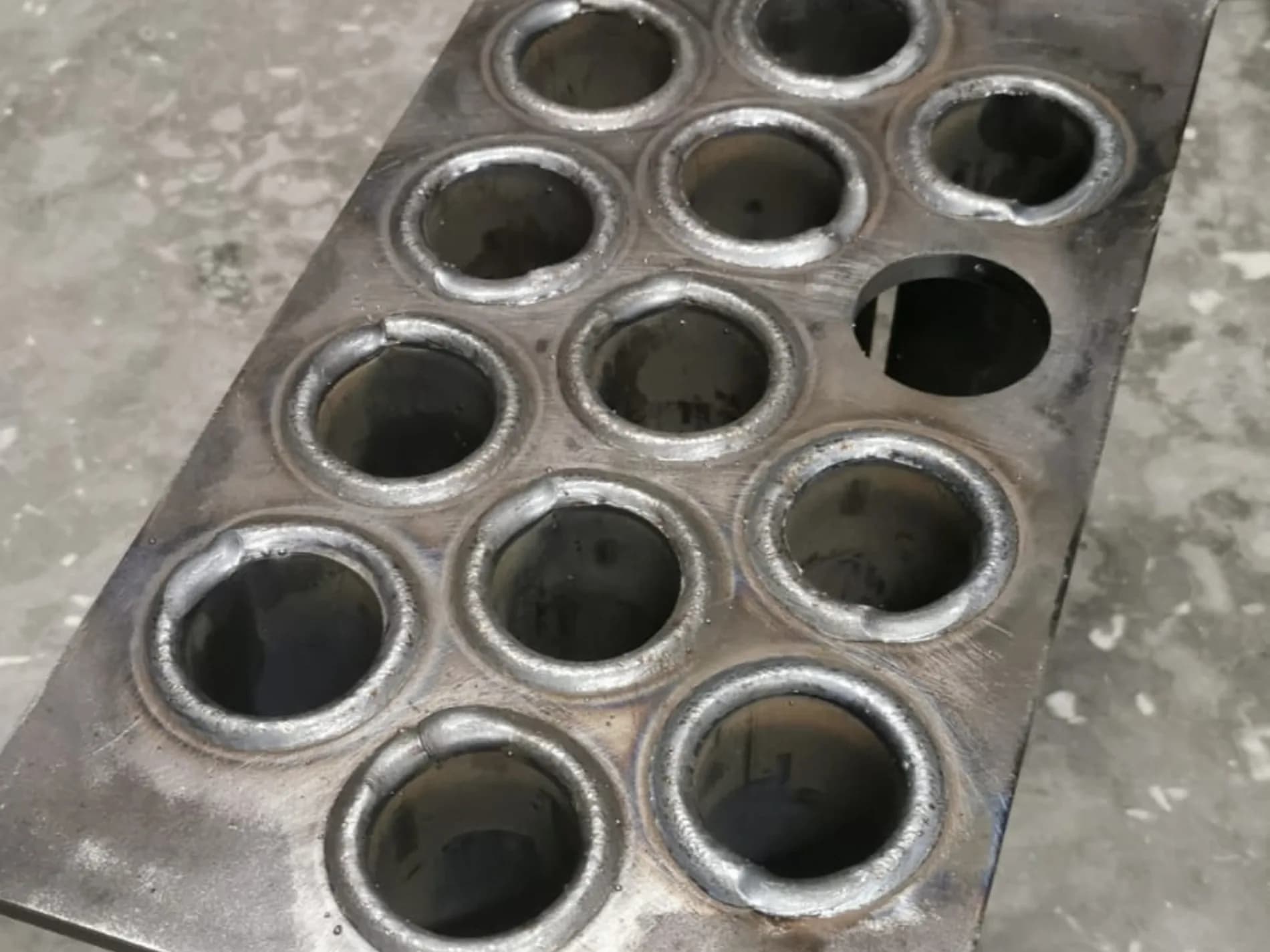
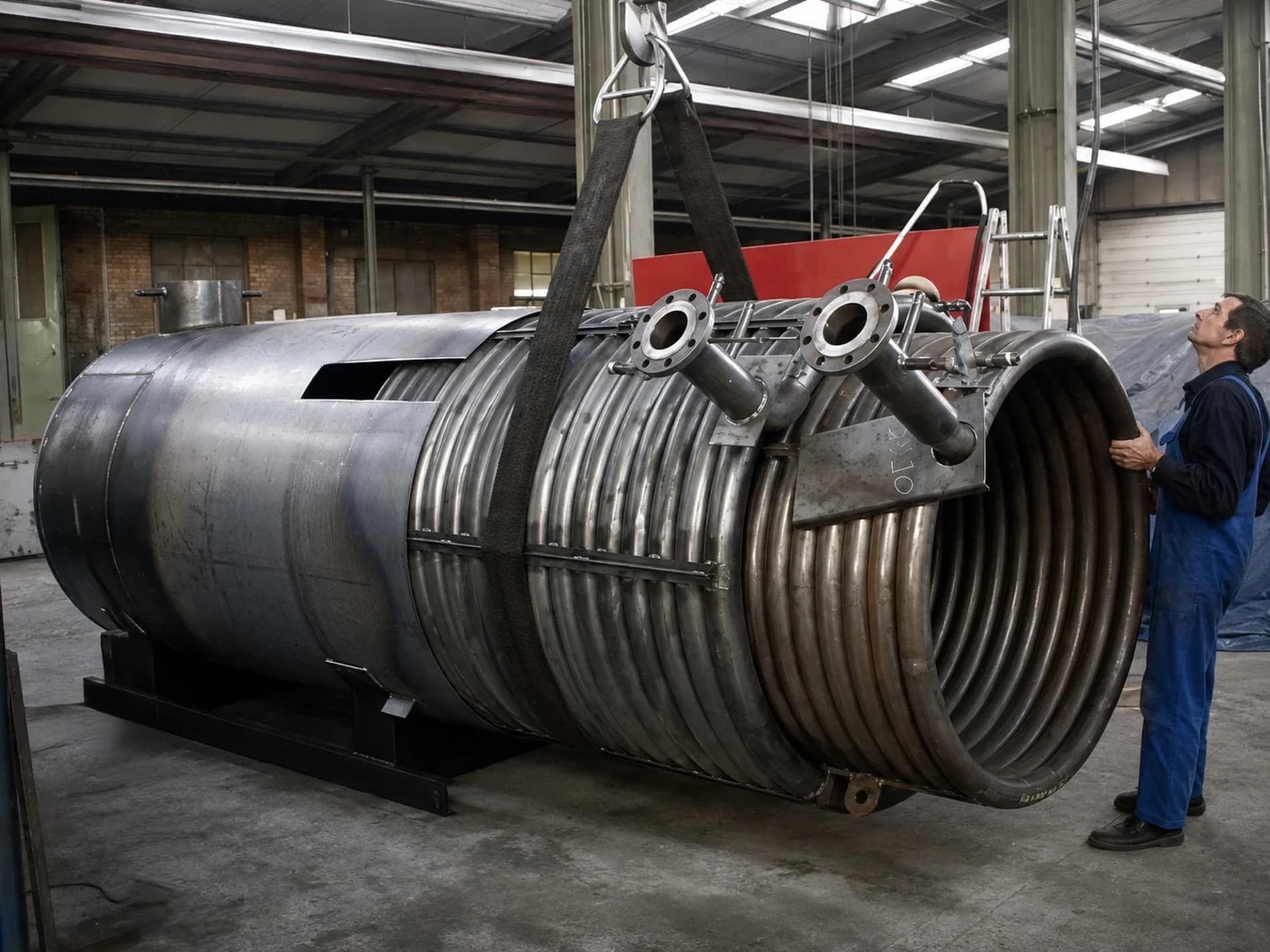
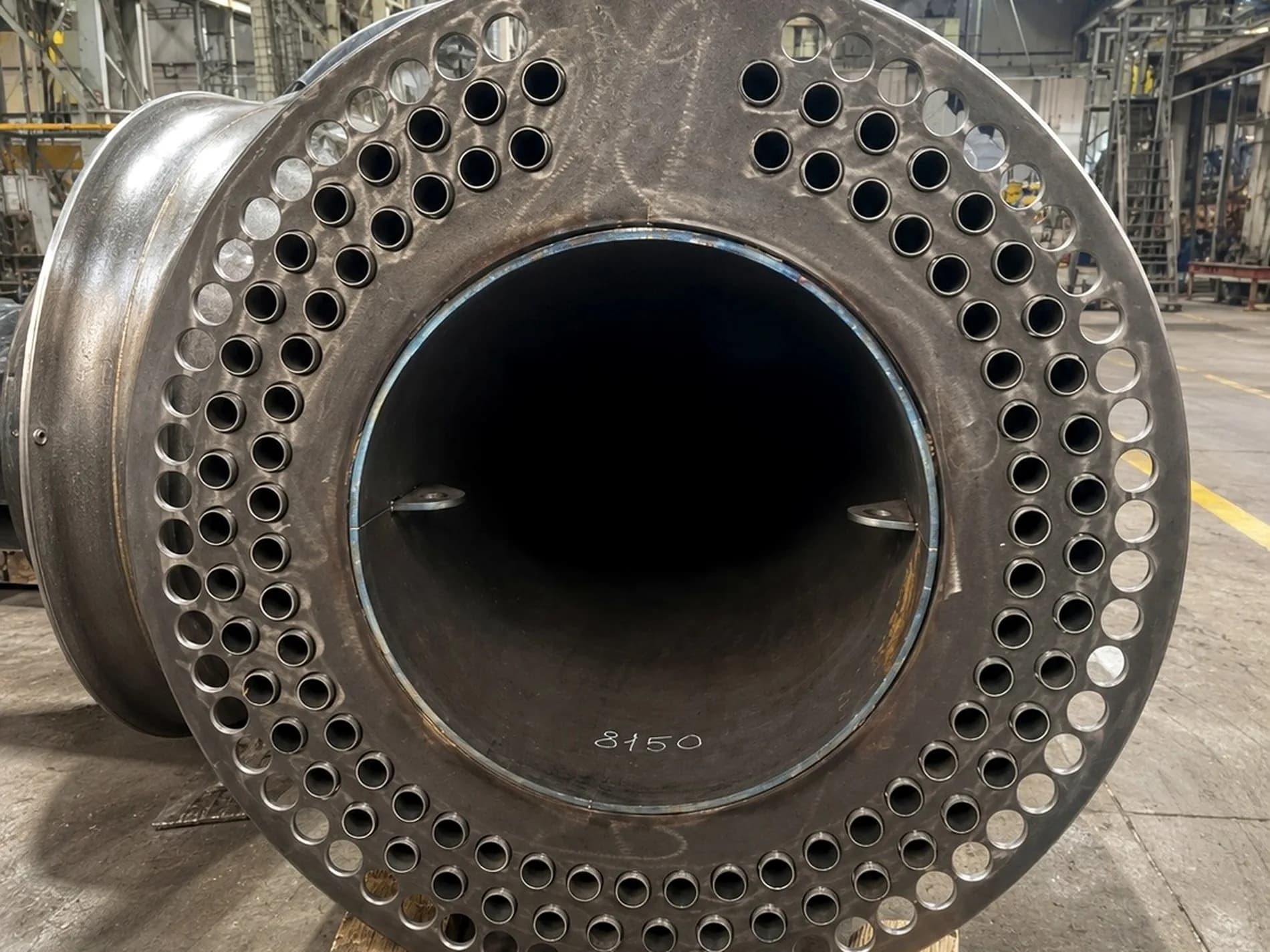
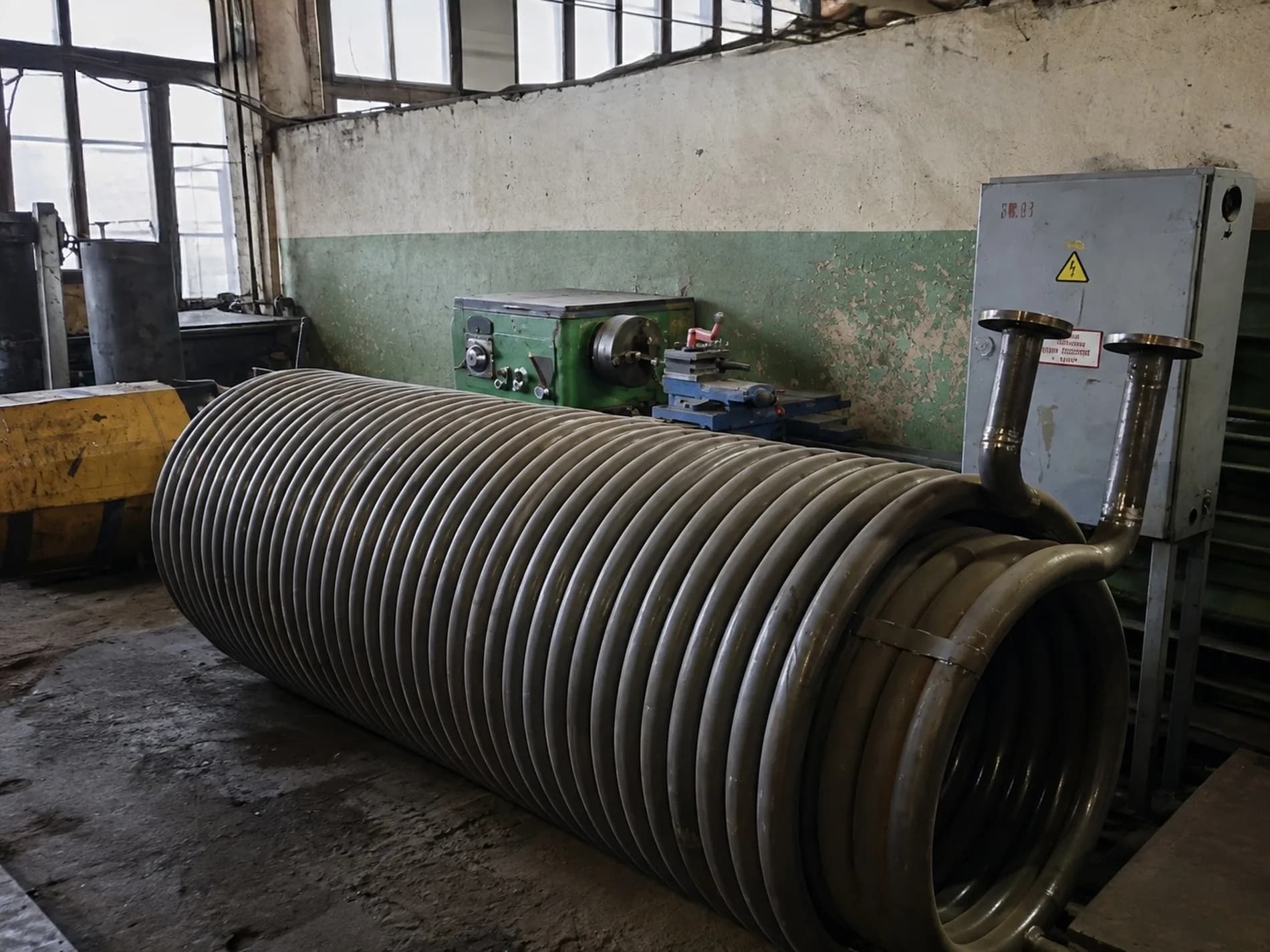
P265GH boiler-grade steel to EN 10028, with thickness increased 30% above the industry minimum. Certificate for every batch, spectral analysis.
12Kh1MF and 15Kh5M steel for structural elements in the high-temperature zone. Creep calculation.
High-density basalt wool, reflective screens, galvanized steel cladding with a protective coating.
Heat-resistant concrete for furnace lining, withstands up to 1600 °C. Used with fireclay bricks in demanding zones.
Weishaupt, Riello, Oilon burners. Grundfos, Wilo pumps. Siemens, Schneider automation, with local alternatives.
Every batch passes incoming inspection by the QC department. A lab with a spark spectrometer and hardness tester.
A strategic stock of metal and components lets production run without interruption in case of supply delays. Lead times stay predictable.
A boiler is a welded vessel that spends decades under pressure and in direct contact with flame. Its service life is decided not by the quality of assembly or the thickness of the paint, but by what it is made of: the grade of steel, the wall thickness, the condition of the refractory lining, the density of the insulation and the class of the bought-in equipment. That is why material selection here sits outside the area of commercial compromise: the specification is drawn up by the design office, and purchasing cannot substitute an equivalent without the agreement of the engineer who ran the calculations.
The main material for shells, furnaces and tube sheets is pressure-vessel steel, P355NL1 and P265GH to EN 10028-2. These grades are intended for pressure equipment: they keep their ductility in the cold, tolerate cyclic loading from start-ups and shutdowns, and are not prone to embrittlement in the heat-affected zone of a weld.
The calculated wall thickness required by the codes is the minimum at which the structure passes on strength in the as-new condition. Service adds what the codes allow for only in part: oxygen in the make-up water, deposits on heating surfaces, daily thermal cycles. We add 30% over the industry minimum and spend that margin not on strength but on service life.
Not every part of the structure works under the same conditions. Furnace-space components, screens and supports close to the flame run considerably hotter than a wall cooled by water. Ordinary pressure-vessel steel loses strength there under prolonged heating and deforms slowly under its own load.
In such components we use the creep-resistant grades 13CrMo4-5 and X11CrMo5-1: alloying with chromium and molybdenum preserves the structure of the steel at operating temperatures for tens of thousands of hours. That is why we calculate these components not only for strength but also for creep — the accumulation of strain under sustained load. The calculation shows whether a part will hold its geometry to the end of its assigned life or become a consumable.
Losses through the cladding do not show on the nameplate, but they show in annual fuel consumption: every degree on the outer surface is heat that went into the boiler house rather than into the working fluid. The insulation system is designed for λ ≤ 0.04 W/(m·K) and is built up in layers.
Joints and branch penetrations get particular attention: that is where thermal bridges form. We design the cladding to be removable, because insulation that cannot be taken apart without damage stops working after the first repair.
The furnace is the most heavily loaded part of a boiler: the material works at temperatures unattainable for steel and takes a thermal shock at every start-up. For lining combustion chambers we use heat-resistant refractory castable rated to 1,600 °C — it allows complex geometry to be formed without building it up from individual pieces, and therefore without unnecessary joints.
In the more demanding zones we back the castable up with fireclay brick: local repair of brickwork costs less than recasting the chamber. The first heat-up schedule, with a controlled rate of temperature rise, is supplied with the boiler — departing from it during installation remains a common cause of early cracking.
We build the boiler body ourselves, while the burner, the pumps and the control system come from manufacturers that specialise in those items. We have deliberately kept the list of brands short: the shorter it is, the better our engineers know the equipment, and the more predictable the supply of spare parts years later.
Key items come with authorised service: if something fails, you deal not with a reseller but with an organisation that has access to original spare parts. If you need an approved equivalent, or a specific brand to match an installed base, we build the specification around that condition at the approval stage.
Every batch of material goes through incoming inspection by the QC department. A fault in the metal missed at the store costs incomparably less than the same fault at the hydrostatic test of a finished boiler, or on your site. The laboratory has a spark spectrometer and a hardness tester, so we check material on the day it arrives.
A batch that fails inspection is returned to the supplier. The results are tied to the order — at handover those documents are available to your specialists.
The most common reason for missed deadlines in boiler making is not slow manufacturing but the absence of material: the works waits for plate of the right thickness or for a burner, and the customer receives a letter about a new date. We hold stock for roughly 90 days of the programme.
The stock works for you twice over. On time: production starts with cutting in the first days after the drawings are approved. On price: buying in large batches ahead of time protects the price agreed with you from movements in the steel market. If the material you need is not in permanent stock, we quote the lead time including procurement straight away, in the offer, rather than moving the date later.
AI consultant Boilte · Boilte · selection & sizing